
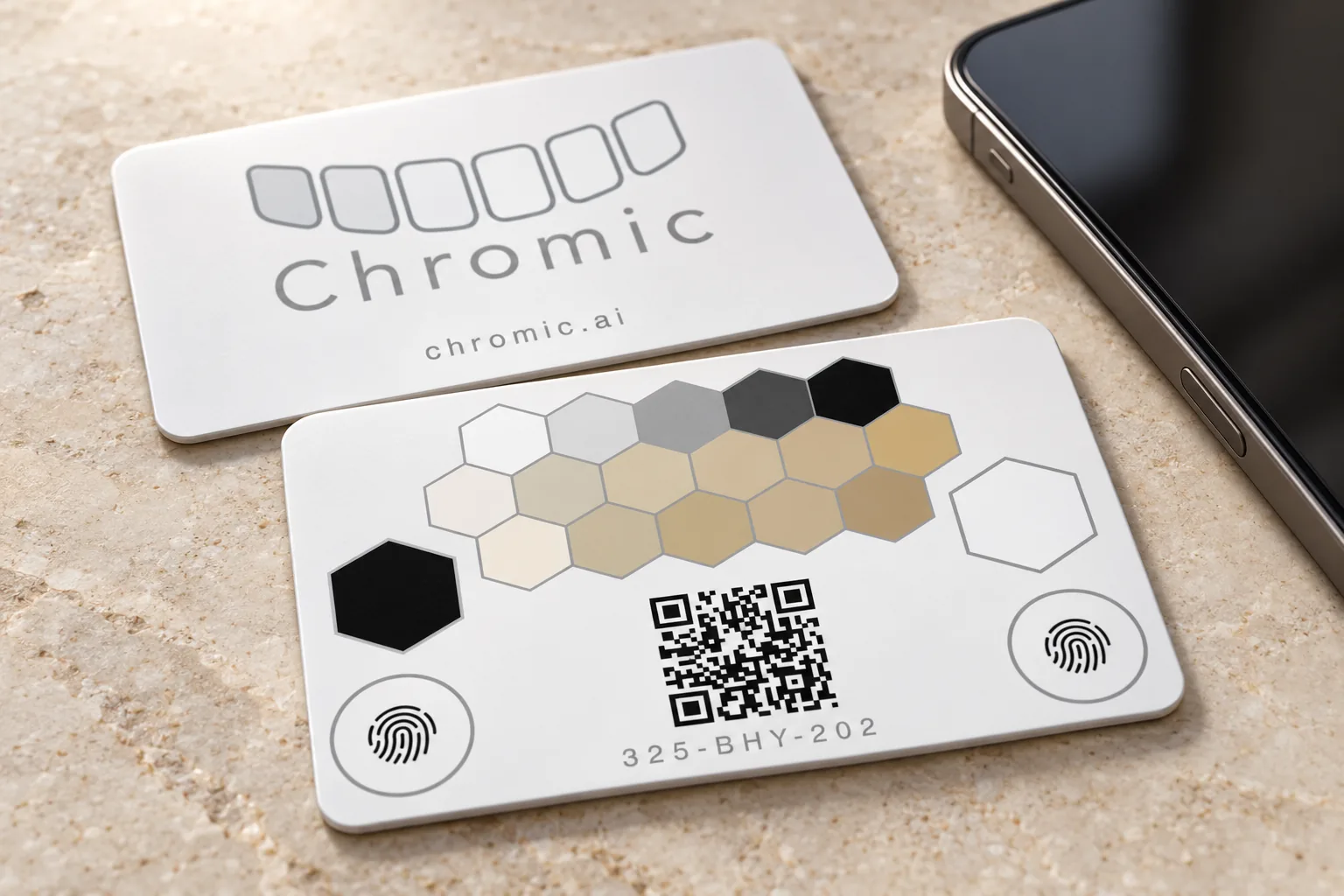
A reference in the same scene
A photograph of a smile depends on how it was captured, not just on what it contains. The phone, lighting, framing and processing all contribute to the result. Chromic’s approach places a reference card alongside the smile to bring references into that same scene. The card does not whiten teeth, replace an examination or identify an exact dental shade. It helps the system normalise captures intended to follow an estimated trajectory within a compatible history. This distinction matters to both clinics and patients: a physical reference supplies context for processing, but does not make every photograph a valid measurement. Nor does its presence establish that two sessions took place under identical conditions. It is part of a capture process, not a guarantee independent of that process.
Placement is part of the workflow
Use the card according to the app’s guidance, keeping the references visible and avoiding covering areas needed for processing. The finger-placement markers have a practical purpose: they help guide the grip without obscuring those references. The card accompanies the smile in the frame; it should not cover the teeth. Our website’s usage scene illustrates this relationship between smile, card and phone, but does not replace the instructions in the app. A recognisable gesture makes the workflow easier to explain. It would be wrong to suggest that holding a card anywhere near the face always produces reproducible results, or that position stops mattering once it is somewhere in the photograph. Guidance concerns the complete scene, not simply the presence of an object.
Normalisation is not a guarantee
Normalisation aims to reduce some capture variability using references and system checks. It does not remove every effect of light, the device or the scene. It is not a certification of absolute accuracy, clinical repeatability or equivalence to an instrument. In digital photography, capture and colour representation depend on a technical chain. The W3C’s general resource on digital colour provides useful background for understanding why an image should not be treated as a truth independent of its conditions. That background does not validate Chromic. Our system’s specific performance needs evaluation using its own data, versions and use conditions. Findings from another method or manufacturer cannot simply be transferred to this workflow because both happen to involve a camera or a reference target.
An estimate for following one history
Chromic calls its photographic whiteness estimate eWID. The “e” makes the estimated nature explicit, distinguishing it from instrumental WID measurement. The longitudinal purpose is to observe changes within the same compatible history and read them alongside elapsed time, the recorded product and reported sensitivity. ΔeWID describes a difference from a compatible baseline; it is not a percentage or a score out of ten. The card alone does not enable comparisons between patients, cameras or products. It does not turn a photograph into a VITA shade identification either. Before interpreting a difference, distinguish a possible follow-up change from a difference in the capture’s technical conditions. The numerical appearance of a result does not remove the need to understand what produced it or how it may be compared.
Do not force an unsuitable capture
A guided workflow needs to be able to say that a capture does not meet the necessary conditions. Repeating it, or leaving a check inconclusive, is different from manufacturing a value to complete a series. This is why a tool should not be judged only by the visual continuity of its charts. Gaps and reasons for review also belong in a cautious interpretation. A damaged card, covered references or an unsuitable scene are not resolved simply because the patient has smiled correctly. The current app instructions should guide the next step without promising that every attempt will be accepted. The professional retains responsibility for interpreting follow-up and deciding when clarification or a clinical assessment is needed, rather than delegating that decision to the appearance of a line.
Physical references and branding serve different purposes
The card and patient app branding have separate roles. For clinics, the 50- and 100-card packs include app branding with the clinic’s logo and Powered by Chromic attribution; the 25-card pack does not. This does not automatically include branding of the physical cards. Networks and brands can discuss physical card branding on request, with design, quantities and commercial terms agreed separately. No logo grants rights over clinical histories or results. The card remains a reference linked to a follow-up workflow, not a certificate of treatment success. Sales are not open yet. Visit the cards page to explore the packs, conditions and availability notification without making a reservation or payment. That commercial information is separate from the technical conditions required to interpret any patient’s follow-up.
Sources and scope
General background resources; not validation studies of Chromic or product endorsements.